
In a development that could reshape West Asia's security landscape, US President Donald Trump announced Friday that he will convene an emergency meeting in the White House Situation Room to make a final decision on a broad, multi-part peace deal with Iran.

In a significant diplomatic manoeuvre aimed at de-escalating regional tensions, Iran has reportedly submitted a "new proposal" to the United States through Pakistani intermediaries.
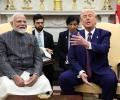
Prime Minister Narendra Modi and US President Donald Trump discussed the West Asia crisis and the importance of keeping the Strait of Hormuz open and secure. They also reviewed progress in bilateral ties and anticipated upcoming deals in the energy sector.

Iran has denied agreeing to participate in a second round of peace talks, contradicting claims made by the United States. The denial comes as tensions remain high in West Asia, with a ceasefire window nearing its end.
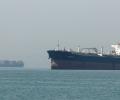
A high-stakes memorandum for a 60-day ceasefire between the United States and Iran is in its final stages, with negotiators working to close remaining gaps and avert further escalation in the region, including reopening of the Strait of Hormuz and the resumption of Iranian oil sales, according to an Axios report citing US officials.

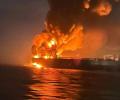
Tensions escalate as Iranian forces attack a container ship in the Strait of Hormuz after Trump announced the ceasefire extension.

As many as 35 vessels, including cargo carriers and oil tankers, successfully navigated through the strategic maritime chokepoint of the Strait of Hormuz over the last 24 hours, according to Iran's state media reports citing a formal declaration by the Islamic Revolutionary Guard Corps (IRGC) Navy.

Iran has strongly criticised US plans to impose a blockade on its ports, warning that maritime security across the Persian Gulf region would be jeopardised if its own security is threatened.
India's foreign policy establishment is adjusting with alacrity in real time -- an extraordinary spectacle in itself, considering the manifest reluctance to indulge in public diplomacy critical of American moves, observes Ambassador M K Bhadrakumar.

Following the signing of a 14-point Memorandum of Understanding (MoU) with Iran, US President Donald Trump reiterated the terms for a 60-day negotiation period, vowing that Tehran will receive "not ten cents" in financial relief.

The harsh truth is that the US is no longer a reliable partner, cautions Ramesh Menon.

Donald Trump announced he is replacing the 20% reimbursement fee for securing the Strait of Hormuz with massive trade and investment deals from Gulf States into the United States, while maintaining a full blockade on Iranian ship traffic.
There are enough people at the top decision-making level in Tehran who are still willing to negotiate, provided Trump can create the right setting for the negotiation to acquire a dynamic of its own, points out Ambassador M K Bhadrakumar.

Dozens of US planes carrying ammunition landed in Tel Aviv, raising concerns about potential strikes on Iran. Negotiations between the US and Iran remain deadlocked over key issues, with both sides issuing fresh demands and warnings.

Gwadar is viewed as a critical pearl in China's maritime strategy as it would give a permanent logistical footprint near an important choke point - the Strait of Hormuz and the oil rich Persian Gulf, explains Commodore Venugopal Menon (retd).

Iran has lodged a formal complaint with the United Nations, accusing the US of engaging in 'piracy' following the seizure of Iranian vessels. The complaint was detailed in a letter sent by Iran's UN envoy to the UN Secretary-General and the Security Council.

Iranian Foreign Ministry spokesperson Esmail Baghaei stated that Iran is instead working with Oman to establish a mechanism for the safe passage of ships through the Strait.

Iranian Foreign Minister Seyyed Abbas Araghchi stated that the Strait of Hormuz remains open to all commercial vessels, requiring ships to coordinate with Iranian naval forces due to regional tensions and a US blockade.

US Special Envoy Steve Witkoff and Iranian Foreign Minister Abbas Araghchi are reportedly heading to Switzerland for a new round of US-Iran negotiations, following a recently announced memorandum of understanding to end hostilities in West Asia and a ceasefire between Israel and Hezbollah.

The Gulf countries on Monday welcomed a peace deal reached between the US and Iran to end their conflict and called for protection of maritime routes and freedom of international navigation, including the uninterrupted flow of traffic through the Strait of Hormuz.

Speaking to reporters aboard Air Force One, Trump said the US prefers a negotiated settlement and expects cooperation from Iran on securing nuclear-related materials.

US President Donald Trump on Thursday said that he has directed the country's Navy to take decisive action against any vessels attempting to lay mines in the strategically vital Strait of Hormuz amid escalating tension over the virtual control of the waterway between Tehran and Washington.

Trump further alleged that Iran was behind the attacks on three vessels carrying Indian seafarers near the Hormuz Strait, which resulted in the deaths of three, despite the US Central Command having confirmed that the strikes were carried out by American naval forces, calling the incident "totally unacceptable."

US Secretary of State Marco Rubio said that discussions aimed at halting the conflict with Iran have shown "some slight progress," while simultaneously echoing Washington's dissatisfaction with its NATO allies.

Head of the Iranian Parliament's National Security Committee Ebrahim Azizi on Saturday said that Iran has prepared a "professional mechanism" to regulate maritime traffic in the Strait of Hormuz through a designated route, which will be unveiled soon.

The Iranian Embassy in South Africa has launched a biting social media attack on US President Donald Trump, using a viral maritime audio clip to label him an "idiot".

Uncertainty surrounds the US-Iran talks as a two-week ceasefire approaches its end. Pakistan is attempting to mediate, but tensions remain high after a recent naval incident.
As tensions in the Middle East approach a critical juncture, reports have surfaced regarding a draft memorandum of understanding between the United States and Iran aimed at de-escalating the ongoing conflict, Iranian state media reported on Wednesday.

The reopening of the Strait of Hormuz, following a ceasefire agreement between the US and Iran, is expected to significantly ease India's crude oil supply risks, lower freight costs, and reduce inflationary pressures, as global oil prices have already dropped.

US President Donald Trump maintains that the ceasefire with Iran is still in effect despite recent military engagements near the Strait of Hormuz. He also commented on a recent clash where US forces responded to Iranian attacks on US Navy destroyers.

Donald Trump issued a fresh warning to Iran as negotiations remained deadlocked over uranium stockpiles, sanctions relief and war compensation. The US President's sharp remarks came just hours after Iranian media revealed Washington's core conditions for resuming negotiations.

US President Donald Trump on Monday doubled down on his hardline stance against Tehran while dismissing mainstream media narratives regarding his foreign policy motivations.
Iran has announced the Strait of Hormuz is open to commercial vessels, coinciding with a ceasefire between Lebanon and Israel.

While the Andaman and Nicobar islands serve as a vital, stationary asset for projecting power in the Indian Ocean, referring to them as an unsinkable aircraft carrier ignores key military and geopolitical limitations, explains Commodore Venugopal Menon (retd).

US Vice President J D Vance is expected to travel to Islamabad for peace talks with Iran to end the seven-week war, amid a fragile ceasefire and ongoing tensions.

Iran's ambassador to India, Mohammad Fathali, has described India as a "reliable and compassionate" partner while asserting Tehran's territorial authority over the Strait of Hormuz amidst ongoing regional tensions.

The United States and Iran could resume negotiations as early as next week in Islamabad, according to a report by The Wall Street Journal citing people familiar with the matter.
Trump has made it clear: the US will not lift its blockade of Iranian ports until a deal is signed.

Trump has said he would be present at the signing ceremony in Islamabad. Don't be surprised if the Pakistani hosts make it a grand event in the geopolitics of the region. Trump would love that, notes Ambassador M K Bhadrakumar.

Chinese President Xi Jinping has called for the Strait of Hormuz to remain open for normal passage of ships, describing it as an 'international waterway' amid rising tensions between the US and Iran.
